
Perpendicular Systems™ at Perpendicularsystems.com
Structure - Space - Direction - Flow
So a Domino Server and Jupyter Notebook Were Having a Drink...
And an AI model pulled up a chair...
By closing time, the Domino server had imploded.
Not crashed. Turned inside out.
Its documents, forms, permissions, workflows, agents and replication logic were no longer organized around one corporate server or application. They had become portable, purpose-bound objects that a person could select, compose, govern, use—and then put away.
The Jupyter notebook had become a compositional instrument: an inspectable sequence of data, instructions, tools and decisions that could be revised, rerun and reused.
And the AI model?
It was given a job—but not the keys.
That is Perpendicular Systems™.
Perpendicular Systems is an invention: a person-first, business-first architecture for building small, purpose-specific systems from governed objects, reusable instructions and user-selected technologies.
It draws upon the distributed capabilities of Lotus Notes/Domino, the transparent and generative workflow of Jupyter, and the control disciplines of enterprise architecture—but it is not a recreation of any of them.
Traditional applications make the platform the center of authority and treat the person as data inside its system.
Perpendicular Systems reverses that relationship.
The person or business defines the purpose, policies, information, participants, permissions, boundaries and intended result. AI models, software platforms and cloud services provide the mechanics. They remain replaceable components—not the owners of the process or sources of truth.
This is the basis of the Deliberately Disaggregated Architecture Model™ (DDAM), Symbolic Composable Object Architecture™ and SaaSi Cubes™:
Objects persist. Applications are temporary compositions. Technology remains subordinate to human intention.
The architecture operates perpendicular to existing systems. It can use current computers, phones, cloud services, models and applications without requiring any one provider to contain—or control—the whole.
Built from operating experience
I developed this architecture from seven years of Lotus Notes/Domino development at Deloitte and Ernst & Young, followed by progressively broader implementations of distributed computing, identity, security and business-technology governance across Chase, American Express, HSBC/Household, Wells Fargo, Lockheed and Visa—including work supporting Visa’s Global Information Security Strategy and Program.
The technology has changed.
The architectural obligation has not:
The person defining the process must remain in authority.
The technology performing the process must remain an enabler.
Perpendicular Systems applies that obligation to AI.
See how the architecture works.
Explore the current prototypes.


So a Domino Server and Jupyter Notebook Were Having a Drink.
So a Domino Server and Jupyter Notebook Were Having a Drink...
By Amy Lynn Freeman
September 25, 2026
--- from Amy Lynn Freeman's Blog
So I walked into a bar, and a Domino Server and a Jupyter Notebook were already there.
Domino had taken over the booth. Documents, forms, workflows, permissions, replication, applications—the entire enterprise—were stacked neatly inside one large, extremely self-confident system.
Jupyter was sitting at the bar writing code in public, explaining itself as it went, displaying the results immediately, and treating the boundaries between idea, instruction, data, and output as more of a suggestion.
Then iofthestorm arrived, because apparently I needed an imaginary character to negotiate with my own technology history.
Oriana, my ChatGPT assistant, came too.
This was clearly not going to end quietly.
After a few too many—drinks, abstraction layers, or decades of enterprise architecture; I have stopped counting—we got into an argument.
“What if Domino isn’t wrong?” I asked. “What if it is simply inside out?”
The valuable idea inside Domino was not that one vendor should control the entire environment. It was that documents, identity, permissions, workflow, communication, and applications could exist within one coherent operating context.
Jupyter contributed something different: a working environment could be composed in front of the user, piece by piece, with its instructions, content, transformations, and results visible together.
So Oriana and I exploded the Domino Server from the inside out.
Not destroyed it.
Unbundled it.
The large integrated platform became a field of smaller, reusable, user-composed objects:
SaaSi Cubes™.
A cube might contain data, rules, relationships, state, actions, references, media, or an interface component. Cubes could be assembled for one purpose, rearranged when that purpose changed, and used to produce a working application without treating the application as the permanent center of the system.
That is the idea behind User-Composed Dynamic Application Architecture™:
The objects and their governing relationships endure. The interface and runtime can change.
The user composes the working environment from reusable parts. The application becomes one possible performance of those parts—not the organizing center of the universe.
This remains an experiment. It is not a finished platform, a validated market, or a claim that forty years of software architecture can be resolved over cocktails.
But it is a much clearer description of what I have actually been building.
SaaSi Cubes™ did not begin as another attempt to fix the entire technology industry. They began with a more playful question:
What happens when an integrated server, a live notebook, a symbolic instrument, and a human composer are allowed to occupy the same room?
Apparently, they form a band.
And yes—the Domino Server insists on playing bass.
Domino and Jupyter are referenced as characters in an architectural thought experiment. No affiliation or endorsement is implied. These are the kinds of shenanigans that go on on Symphone.ai, I don't know, things are so weird over there sometimes:)...
For more on SaaSi Cubes™ please see my Exhibition Cube for the upcoming Expo Metro Group Show in Florence, November 28-29,2026! at https://the-singers-tears.com and https://saasicubes.com.
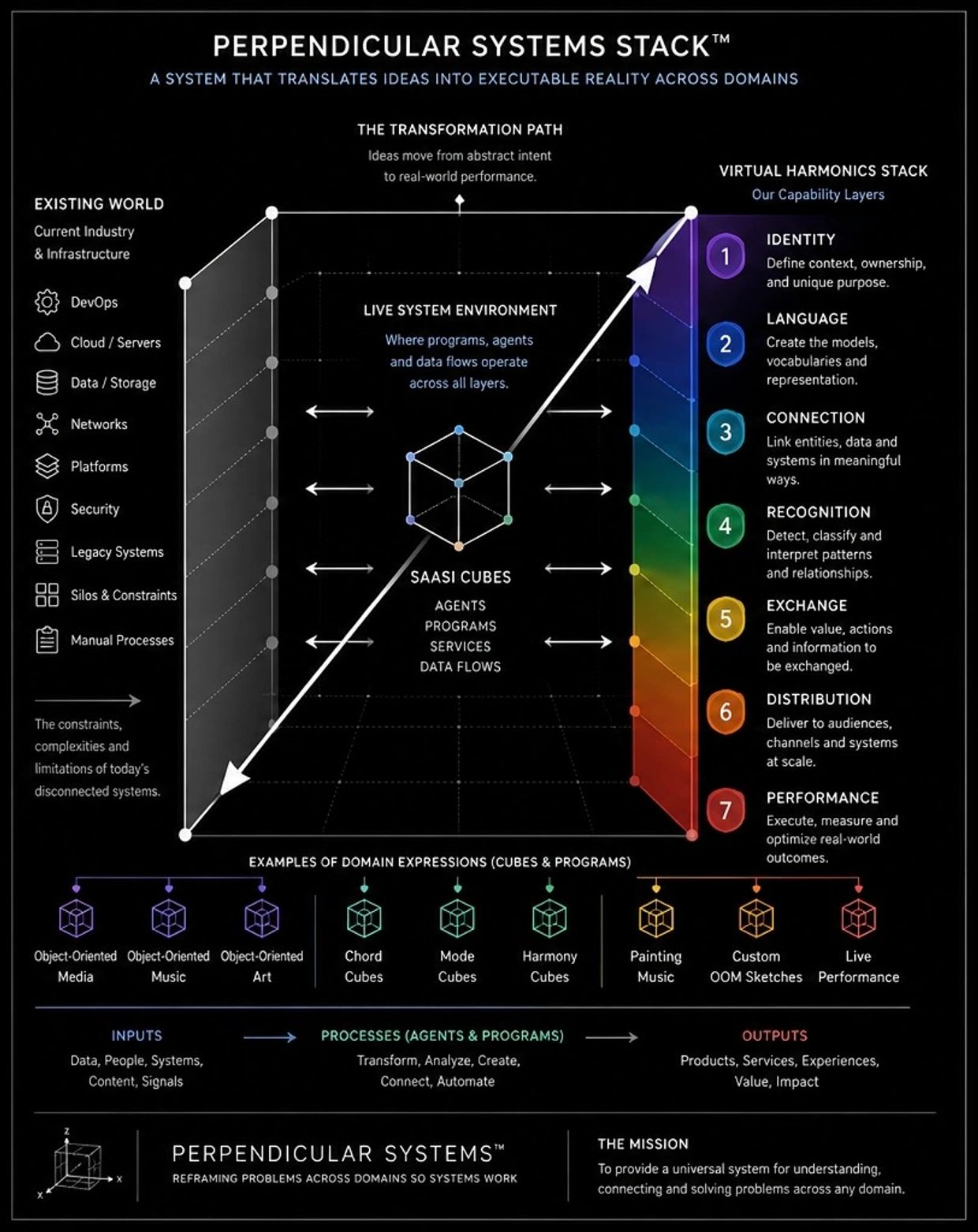
What Kind of AI Infrastructure do we Actually Need?
Current DevOps Landscape for Corporate Systems
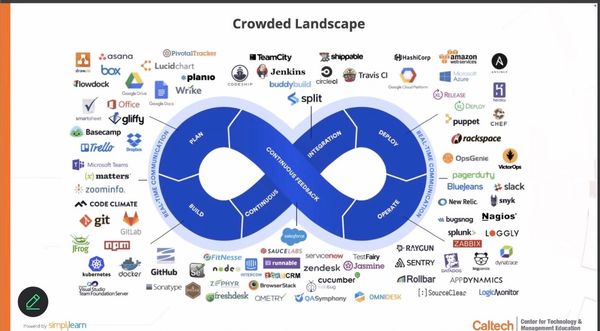
Thanks to Federico Arroyo's Caltech Seminar on DevOps 2025
Current DevOps Landscape for Personal Systems

This market is far less crowded and serves millions of potentially new technology users.
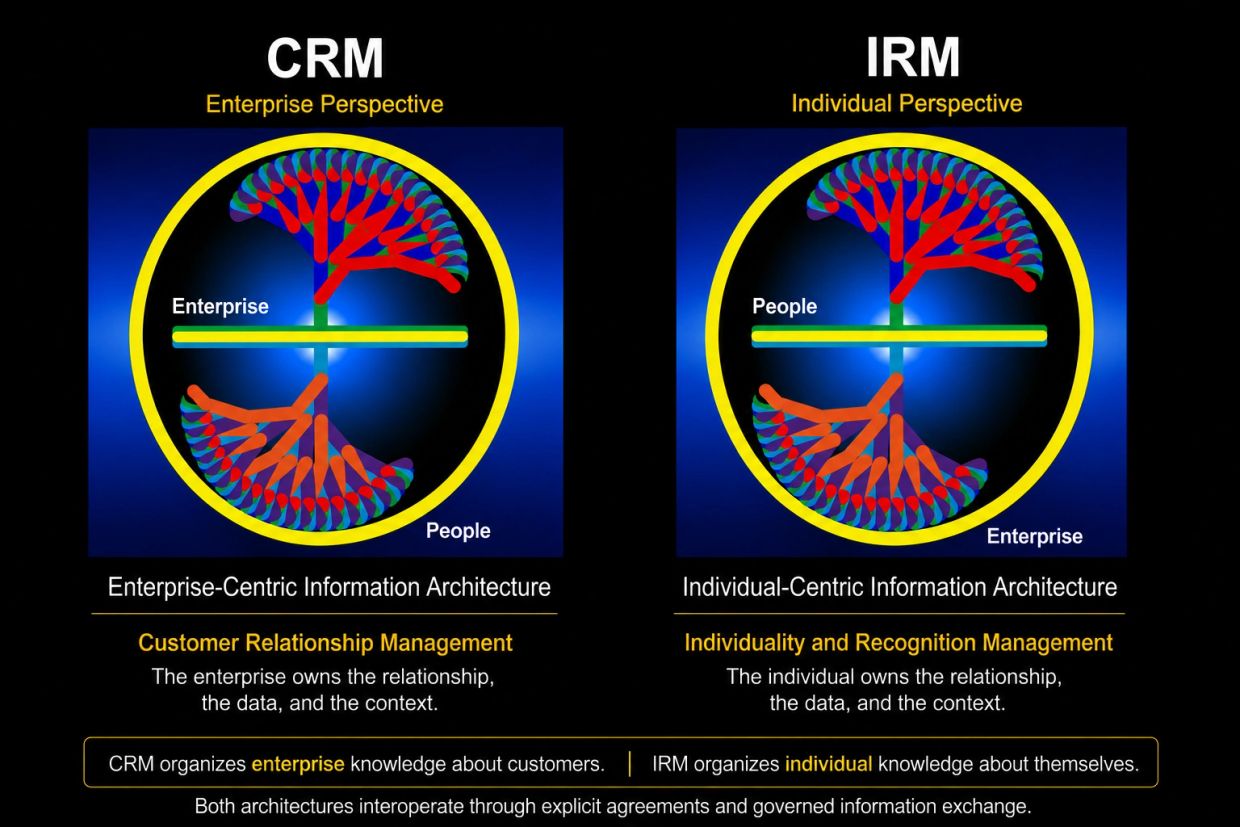
Human-Centered Architecture™
Repositioning organizations and platforms as enabling structures around the individual.
Traditional systems often position individuals inside organizational and platform-controlled structures.
Perpendicular Systems™ proposes a human-centered orchestration model.
A human-centered architecture where organizations, technologies, and AI systems operate as enabling layers around the individual — supporting identity, continuity, creativity, communication, and self-directed orchestration.
This model does not replace existing systems.
It reorganizes the relationship between:
- people,
- platforms,
- and institutions
to support more composable and user-directed environments.
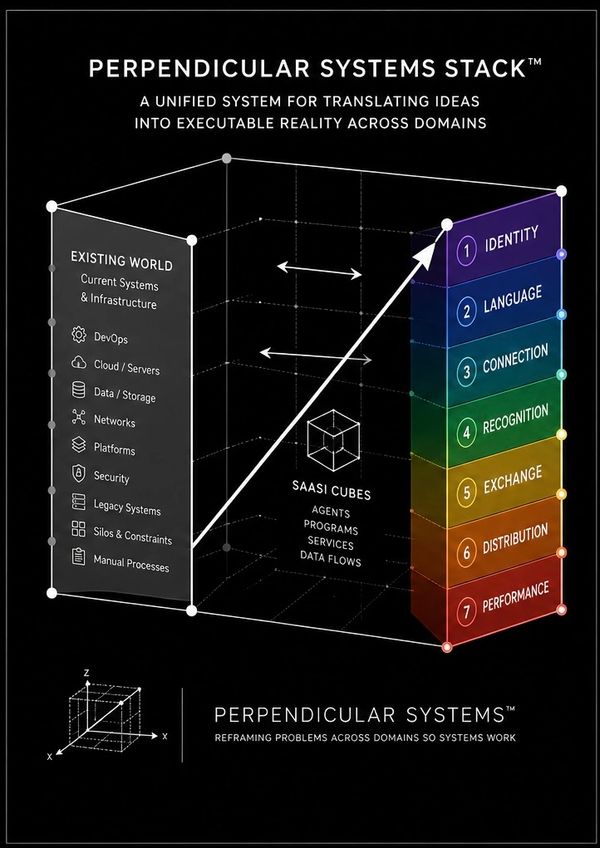
Our Approach
Perpendicular Systems at PerpendicularSystems.com
Taking inspiration from past experience, but focusing now on the systems of individuals, the model has evolved accordingly.
Our Technology Division, Perpendicular Systems, develops Virtual Distributed Symbolic SaaSish User-Composed Components called "SaaSi Cubes"™ designed for artists, musicians, individuals and small businesses.
Our Virtual Harmonics "Deliberately Disaggregated Architecture Model"™, or DDAM, allows for the integration and processing of both real and imaginary associations between data on different planes of operation and in different systems.
Perpendicular Systems
AI & Enterprise Architecture Consultant | Designing Systems That Actually Work Across People, Process, and Technology
Built referencing the Enterprise Architectures of large companies, my approach is "Enterprise Architecture for Individuals", or EAI.
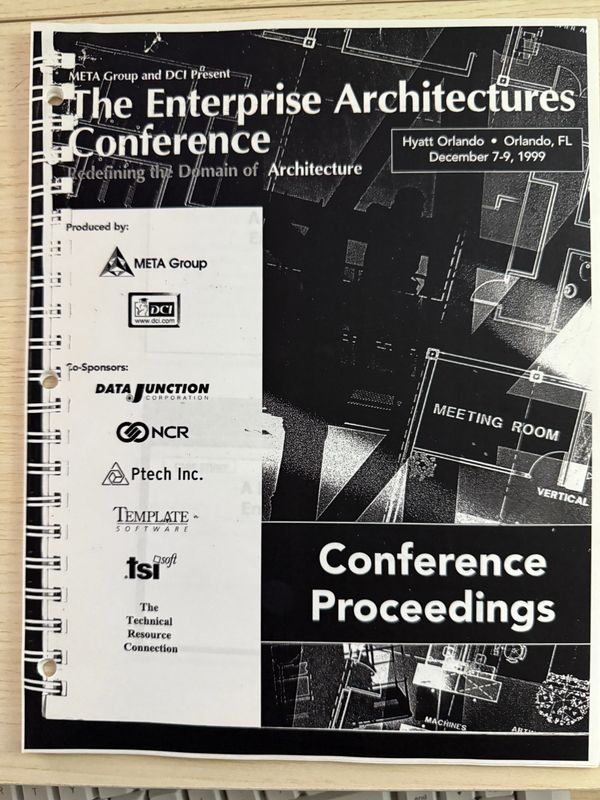
Photo is my presentation at the DCI Enterprise Architecture Conference in 1999 about Ernst & Young's Enterprise Architecture Department which I designed.
I design and stabilize complex systems—across identity, finance, and data—when existing approaches break down.

Consulting Focus
I help organizations and individuals operate in environments where technology, structure, and human behavior are out of alignment.
My work sits at the intersection of enterprise architecture, AI, and human-centered system design, including:
- Enterprise architecture models and system design
- Program and governance structures for complex initiatives
- Cross-domain system integration (financial, identity, and data systems)
Prior to founding Virtual Harmonics, I led the design and delivery of large-scale financial and technology systems at institutions including Visa, Wells Fargo, HSBC, American Express, and JPMorgan Chase.This work included:
- Global information security strategy
- Identity and access management architecture
- Transaction systems and financial infrastructure
- Regulatory-driven enterprise programs in highly regulated environments
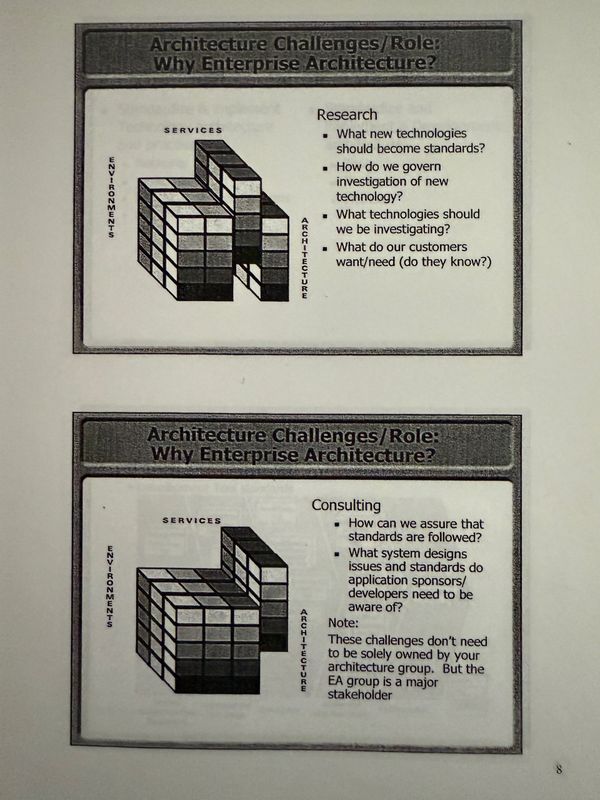
These images are cubic structures I used to represent the systems of a global professional services organization.
Symbolic Composable Object Architecture™
Deliberately Disaggregated Architecture Model™ (DDAM): Object Architecture
Deliberately Disaggregated Architecture Model™ (DDAM): Object Architecture
Deliberately Disaggregated Architecture Model™ (DDAM): Object Architecture
A conceptual model showing Perpendicular System's DDAM Object Architecture operating orthogonally to existing infrastructure. The left face represents current tools and platforms; the rear face represents the Virtual Harmonics stack; the remaining faces represent services that extend in different directions depending on object function, user role, and lifecycle stage. Objects persist even as surfaces change.
Perpendicular Systems do not define applications. They define objects. Applications are treated as temporary expressions of deeper object structures authored by users, not as sources of truth.
Virtual Piano Studio™: Example of Temporal & Compositional Grids
Deliberately Disaggregated Architecture Model™ (DDAM): Object Architecture
Deliberately Disaggregated Architecture Model™ (DDAM): Object Architecture
Hand-drawn sketch illustrating SaaSi Cubes as reusable, revisable grids rather than fixed workflows. Structure remains stable while content, tools, and meaning evolve across time. This diagram documents a thinking process, not a finished system.