Signed in as:
filler@godaddy.com
Signed in as:
filler@godaddy.com
It helps people compose lessons, projects, businesses, performances, and collaborative workspaces from reusable symbolic building blocks that adapt to the people and purpose involved


ProjectHarmony.ai™ is my Personal AI Operating System™ designed to enable AI Governance by the Individual™.
I built it to help me achieve my own objectives using AI systems that operate under my direction rather than requiring me to operate under theirs.
ProjectHarmony.ai™ is a human-directed compositional environment for generative systems engineering.
People define architectures, objectives, governance, and symbolic objects.
AI systems generate implementations that conform to those definitions.
Rather than replacing existing AI systems, ProjectHarmony.ai coordinates them.
It preserves my objectives, identity, provenance, decisions, and work while allowing multiple AI systems to operate together under my control.
ProjectHarmony.ai is a Project of my vYndy™ Virtual Individuality™ Brand of Personal Information Management Products and Services which you can find here: https://vi-01.symphone.tv
This website serves as both the documentation and the live implementation of my Personal AI Operating System™.
Every page, document, workflow, diagram, and publication shown here is created, managed, and published through ProjectHarmony.ai™ itself.
Current Status of the Research
ProjectHarmony.ai™ is an active research and development project exploring what it means for AI systems to operate reliably under the direction of the individual. While recent advances in large language models have made AI broadly accessible, my current research suggests that significant challenges remain in preserving user objectives consistently throughout complex analytical workflows.
One emerging area of investigation is Objective Reliability™—the ability of an AI system to preserve and execute a user's explicitly stated objectives without silently substituting alternative goals or analytical priorities during execution.
For that reason, I am not currently recommending the unrestricted use of general-purpose AI chatbots for business governance, legal analysis, or other high-consequence decision environments. These observations are based on ongoing practical research, including comparative evaluation of multiple AI systems, development of ProjectHarmony.ai™, and weekly Zoom discussions with researchers interested in improving AI governance, transparency, and user-directed system design.
Running on ProjectHarmony.ai™ is my Personal AI Assistant that Works for the Person™—a Virtual Application for Personal Composition™ that helps me create, organize, analyze, publish, and continuously refine my own work.
Unlike conventional AI assistants, which are developed and governed by the organizations that provide them, this Virtual Application is developed, configured, and governed by me. It exists to help me accomplish my own objectives using my own information, my own workflows, and my own evolving knowledge architecture.
As new AI systems become available, they become additional capabilities available to my Personal AI Operating System™ rather than replacements for it.
To encourage open discussion of these and related topics, I host a weekly Zoom meeting for AI researchers, architects, developers, creators, and other interested participants.
Fridays – 3:00 PM Pacific Time
The purpose of these meetings is to exchange research findings, demonstrate new ideas, compare observations across different AI systems, discuss emerging governance challenges, and explore practical approaches for improving Objective Reliability™, transparency, provenance, and user-directed AI architectures.
If you would like to participate, please send a brief introduction describing:
Participation is open to researchers from all technical, academic, commercial, and independent backgrounds who are interested in advancing the practical use of AI through thoughtful discussion and collaborative exploration.

Oriana's Flute™ is our first Personal Composition Instrument™ and introduces a Dynamic Distributed Personal Workspace Architecture™ for composing, preserving, and transforming representations across multiple domains, times, identities, organizations, and realities.
Instead of organizing software, ProjectHarmony.ai provides a Virtual Instrument that organizes the user's own objects, goals, relationships, knowledge, and work into a configurable navigation architecture that evolves as the user's activities change.


.png/:/cr=t:0%25,l:0%25,w:100%25,h:100%25/rs=w:1240,cg:true)
Deliberately Distributed Architecture Model™ (DDAM™)
This diagram illustrates a real-world publishing workflow used for a single artwork ("Für Elise") across independently managed systems including ExpoMetro Madrid, Symphone.tv, Cloud flare, GoDaddy Commerce, Stripe, Hugging Face, and Virtual Harmonics™.
Rather than centralizing all information within a single application, DDAM™ coordinates independently managed representations while preserving identity, provenance, and relationships through user-governed architecture.
This example demonstrates that distributed composition can be achieved using existing commercial platforms without requiring ownership or control of those platforms.
Stay connected with Symphone.tv on social media and get the latest updates, news, and exclusive content from the world of arts and entertainment.
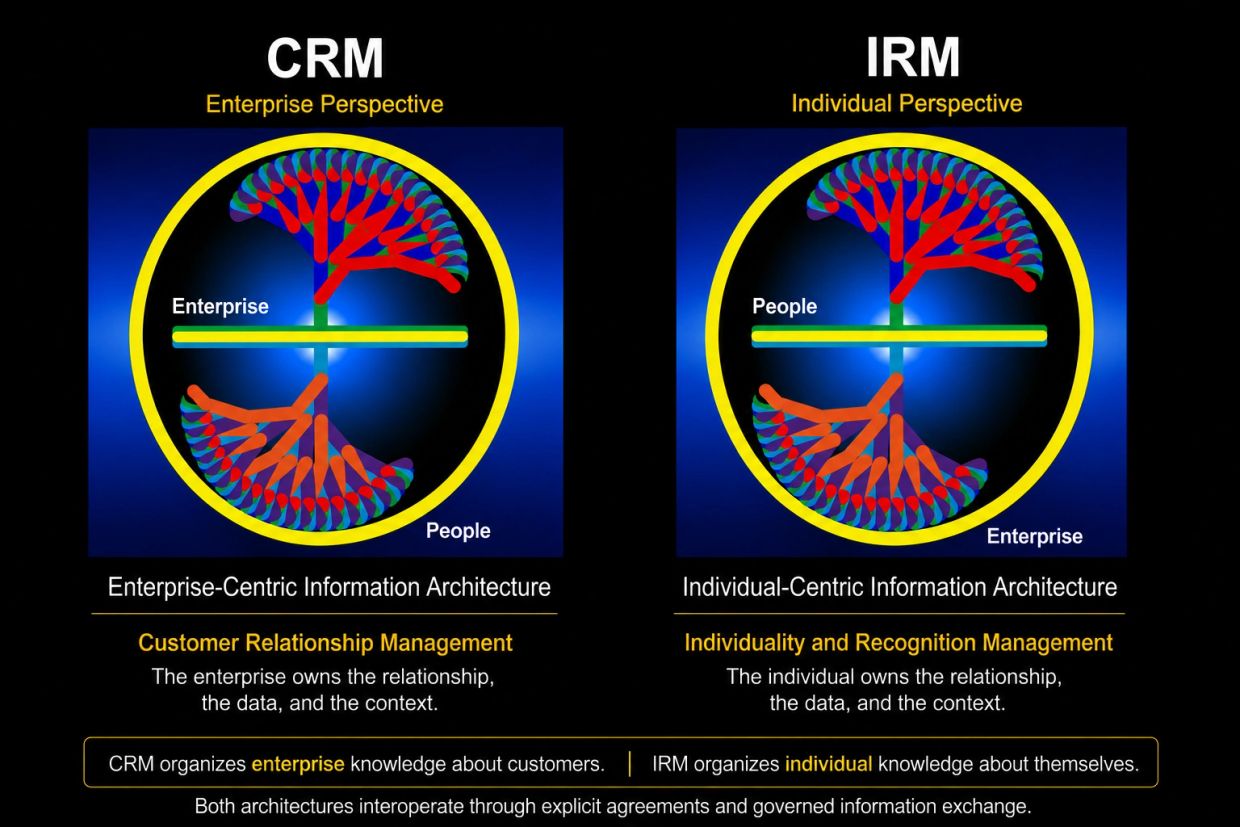
Traditional systems often position individuals inside organizational and platform-controlled structures.
Project Harmony AI™ and Perpendicular Systems™ proposes a human-centered orchestration model.
A human-centered architecture where organizations, technologies, and AI systems operate as enabling layers around the individual — supporting identity, continuity, creativity, communication, and self-directed orchestration.
This model does not replace existing systems.
It reorganizes the relationship between:
Composable Middleware provides the coordination layer that allows identities, permissions, provenance, content, transactions, and relationships to move across existing systems without losing context.
The following architectural models illustrate the evolution of this approach across enterprise architecture, symbolic object composition, creator workflows, publishing systems, and transaction management.
Project Harmony™ is implemented through a set of coordinated architectural components. Each component addresses a specific aspect of identity, information management, publishing, recognition, transaction processing, and relationship management.
A user-centered identity and information management framework designed to preserve authorship, ownership, permissions, provenance, and continuity across multiple systems and channels.
A recognition and attribution framework that preserves relationships between people, content, transactions, achievements, contributions, and outcomes.
Structured transaction objects that preserve participant history, permissions, provenance, lifecycle events, and relationship context alongside traditional transaction records.
A multi-channel publishing architecture that enables content, communications, products, and transactions to be distributed across multiple destinations from a single source object.
A symbolic coordination framework used to represent relationships among people, information, processes, transactions, systems, and creative works using composable object structures.
Together these components form a Virtual Middleware layer operating between individuals, organizations, applications, communication systems, publishing platforms, commerce systems, AI services, and data platforms.
Organizations manage information through disconnected applications, databases, communication channels, publishing systems, and transaction platforms.
As information moves between these systems:
• Identity becomes fragmented
• Content is duplicated
• Provenance is lost
• Relationships disappear
• Permissions become difficult to manage
• Valuable context must be reconstructed repeatedly
Organizations spend significant time and money rebuilding information that already exists somewhere else.
Composable Middleware introduces a persistent coordination layer between participants, content, processes, transactions, and channels.
The architecture preserves:
• Identity Layer
• Provenance Layer
• Process Layer
• Publishing Layer
• Transaction Layer
Rather than rebuilding context after every interaction, the context travels with the interaction.
• Reduced friction
• Better data quality
• Better attribution
• Better provenance
• Better governance
• Better analytics
• Better monetization
The result is a simpler and more accurate representation of the relationships that already exist between people, information, and systems.

By applying our Object Oriented Music™, we bring disparate ideas, concepts, data and scenarios into human-receivable formats.
We work triadically: composing systems, encoding meaning symbolically, and deliberately disaggregating structure from implementation.
1) User-Composed Everything™
2) Symbolic-Triadic User-Composed Codes™
3) Deliberately Disaggregated Architecture Model™
vYndy™ Virtual User-Composed Symbolic Identity Management™ Products and Services.

Virtual Recognition™ Virtual User-Composed Symbolic Recognition Management™ Products and Services.

Virtual Harmonics™ Virtual User-Composed Symbolic Harmonics Management™ Products and Services.
I'm Amy Lynn Freeman.I'm an artist, musician, systems architect, and creator of Virtual Harmonics™.
Everything you see here is my original work.
If you enjoy it, I'd love your help introducing it to other people.
If someone purchases my artwork, music, classes, consulting, or technology
because you introduced them to my work,
I'll pay you a 10% referral commission.
That's it.
No inventory.
No sales quotas.
No complicated affiliate program.
Just introduce people you think will genuinely appreciate what I create.
If they become a customer, I'll share the revenue.
Love my work?
Become a Harmonic Producer™ and help me introduce it to the world.