
PAINTING MUSIC™
Making Music Visible™
Painting Music™ is a generative visual and computational framework for learning, performing, and composing music through embodied symbolic interaction.
Built on a structured, object-based framework, it translates sound into organized visual patterns that reveal how music is constructed.
By mapping musical information into space, it provides a new way to analyze, learn, and interact with music across visual, aural, and spatial domains.

"FÜR ELISE" BY AMY LYNN FREEMAN, EXPOMETRO MADRID, JUNE 19-2
Sponsored by: PaintingMusic.net and ObjectOrientedMusic.com
PAINTING MUSIC™ IN MADRID
In June 2026, "Painting Music™ — Für Elise" by Amy Lynn Freeman was selected for exhibition as part of the ExpoMetro Madrid international digital art exhibition.
The work was displayed on the public digital art installation at Plaza del Callao in central Madrid, alongside artists from around the world.
"Painting Music™ — Für Elise" is an early public demonstration of the Painting Music™ and Object-Oriented Music™ frameworks. Rather than representing music through traditional notation alone, the system translates musical structure into a visual composition that reveals movement, repetition, phrase relationships, and performance patterns through spatial arrangement.
The exhibition represents an important milestone in the development of the project, demonstrating the transition of Painting Music™ from a private research and educational framework into a publicly exhibited visual media system.
Selected Images:
• ExpoMetro Madrid Exhibition Listing
• Plaza del Callao Public Display
• Exhibition Installation Photographs
• Original Painting Music™ — Für Elise Image
See the show at https://expometro.co/en/exhibition/2026-madrid
FROM RESEARCH PROJECT TO PUBLIC EXHIBITION
Painting Music™ began as an educational and systems research project developed through more than fifteen years of teaching, performance, software design, and symbolic media exploration.
The Madrid exhibition marks one of the first public demonstrations of the framework as a visual artwork, connecting music, computation, color, and symbolic structure within a single representational system.
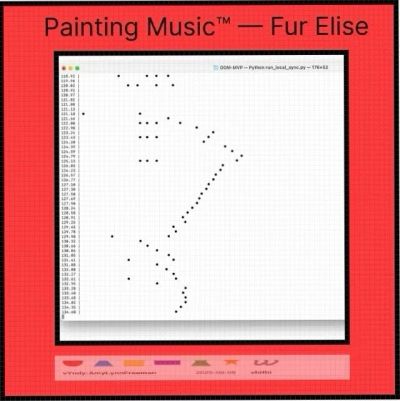
"Für Elise" by amy Lynn freeman, ExpoMetro Madrid, June 19-21, 2026


Screenshot from Google Ai 6-21-26 see https://amylynnfreeman.com for more

"Für Elise" by Amy Lynn Freeman
ExpoMetro Madrid June 19-21, 2026

"Für Elise" by Amy Lynn Freeman
ExpoMetro Madrid June 19-21, 2026


the Magic of the Diatonic Sequence
Diatonic Sequence for Guitar
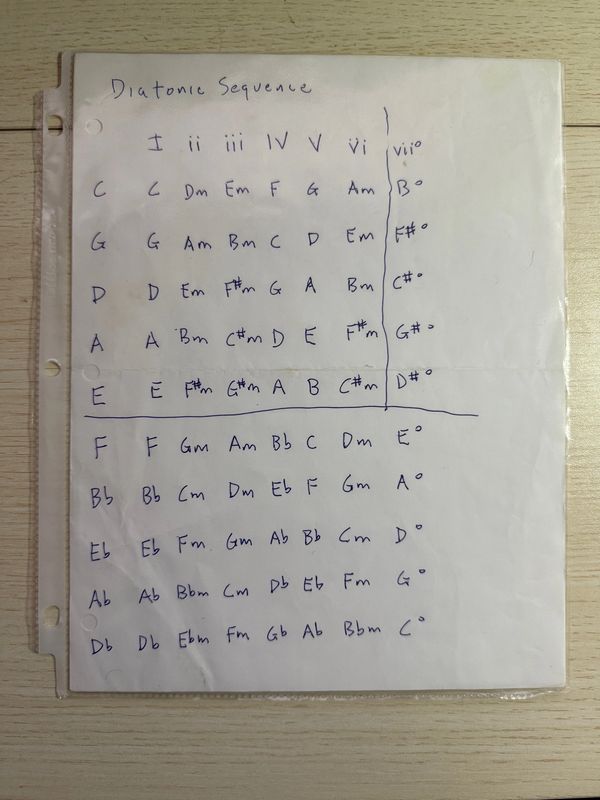
Thanks to Glenn "Houston" Pommiak for this helpful chart.
Diatonic Sequence for Piano
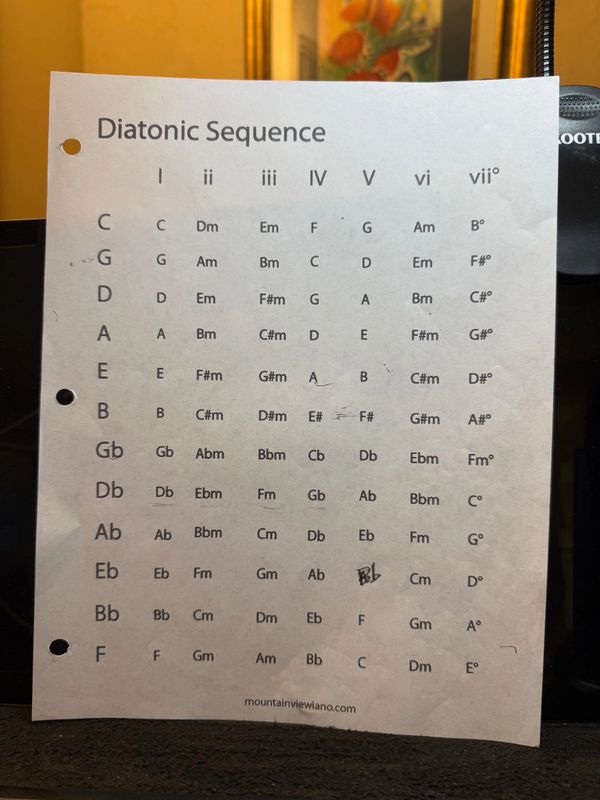
Glenn's chart expanded to all keys
Diatonic Sequence Abstracted

Diatonic Sequence Abstracted to encompass multiple notation schema
Diatonic Sequence Abstracted to Color Wheel
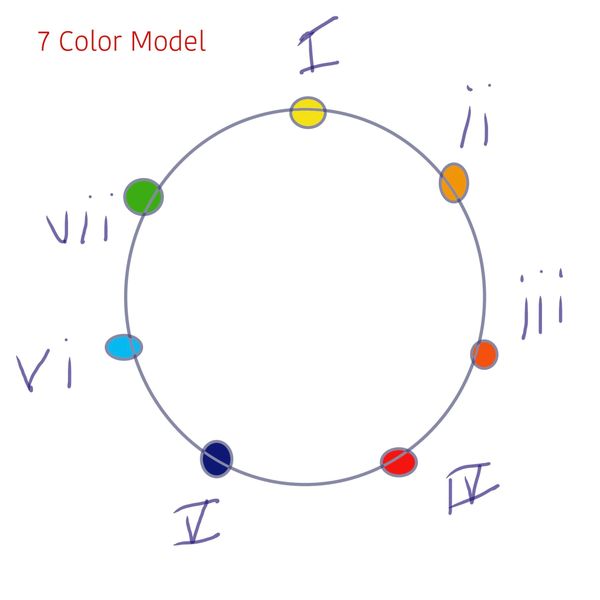
Diatonic Sequence Abstracted to encompass multiple notation schema